Hydrophilic materials
We develop hydrophilic coating materials based on titania sol liquid, in which titanium dioxide (TiO2) is dispersed as nanoparticles. Our hydrophilic coating materials have excellent hydrophilicity, transparency, and self-cleaning functionality, and can be applied across a range of fields including exterior wall paints, architectural glass, and automotive coatings.
Introduction to the Superhydrophilicity of Titanium Dioxide
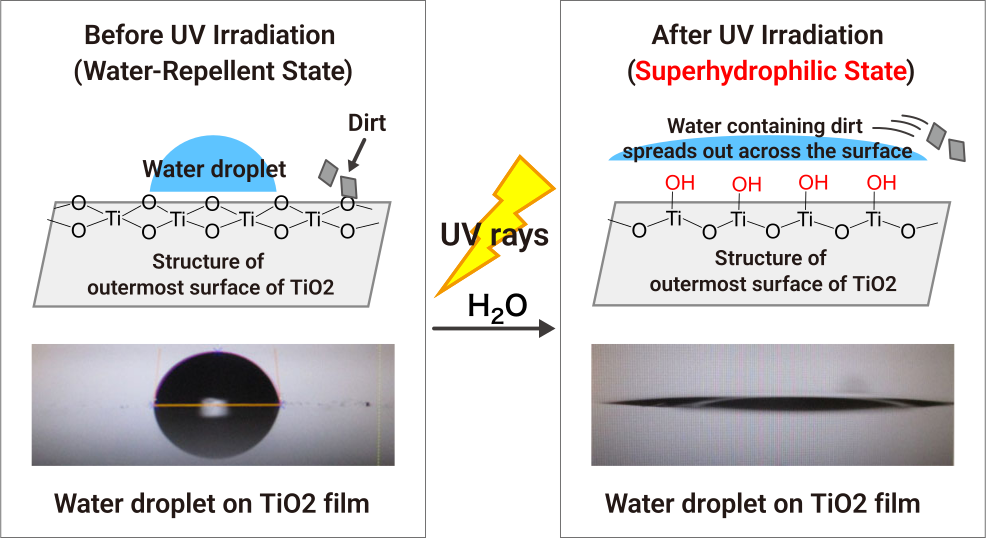
The superhydrophilicity of titanium dioxide refers to the phenomenon in which the titanium dioxide surface becomes highly water-receptive when exposed to ultraviolet (UV) light, causing water droplets to spread into a thin, uniform film. This produces a self-cleaning effect, as water spreads across the surface and encapsulates dirt before carrying it away.
Changes in Upper Surface of TiO2 Before and After UV irradiation
Features of Our Titania Sol Solution
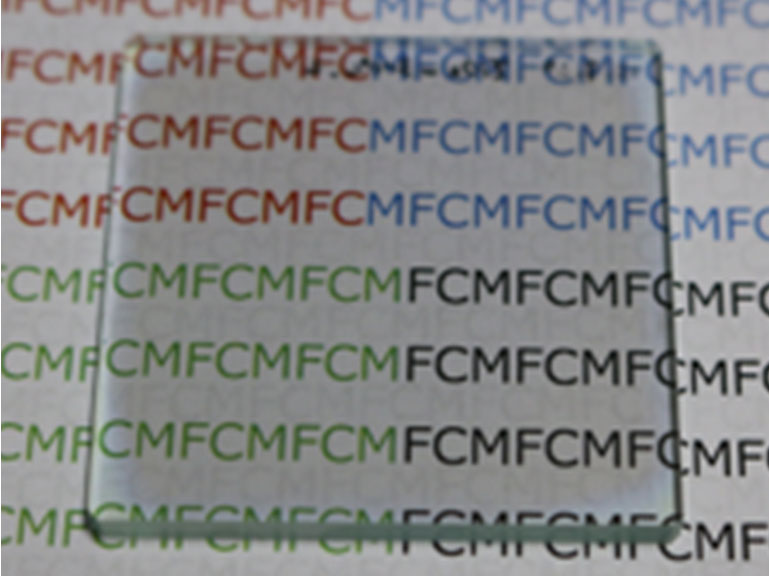
Our titania sol solution can be applied to a wide range of uses, including high refractive index materials, anti-fogging agents, photocatalysts, and anti-reflective agents. Utilizing single-nano-sized titania sol solution produced by our proprietary sol-gel synthesis technology allows us to form transparent and uniform thin films on the order of tens of nanometers. Because such transparent films can be formed on substrates, applying them to automotive mirrors, architectural glass, outdoor cameras, and so on can deliver anti-fogging performance through superhydrophilicity, and self-cleaning performance through photocatalytic functionality.
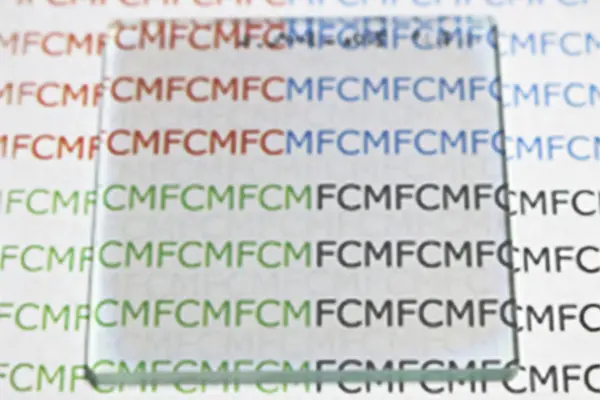
Highly Transparent Thin Film
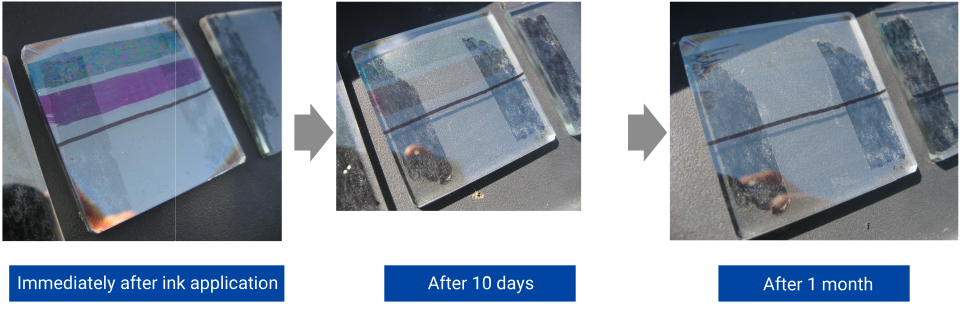
Self-cleaning functionality from photocatalysis
Superhydrophilicity After UV Irradiation
After UV-A irradiation at 6 mW/cm2 for 2 hours, water was sprayed uniformly onto a glass substrate coated on the right side with titania sol solution thin film and uncoated on the left side.
Basic Performance
Thin film characteristics*1
| Substrate | Optical glass*4 |
|---|---|
| Optical film thickness (nm) | 80nm |
| Refractive index*2 | 2.04 |
| Contact angle after UV irradiation (hydrophilicity)*3 | 5.0° or less |
- *1 Film formation conditions: Spin coating (2,685 rpm, 60 s) ⇒ Firing (300°C for 2 hrs)
- *2 Value at wavelength of 550nm
- *3 Contact angle evaluated after UV irradiation at 6 mW/cm2 for 2 hours.
- *4 Other base materials such as acrylic sheets and stainless steel can also be used. The above values are based on in-house evaluation.
Accelerated Weathering Test
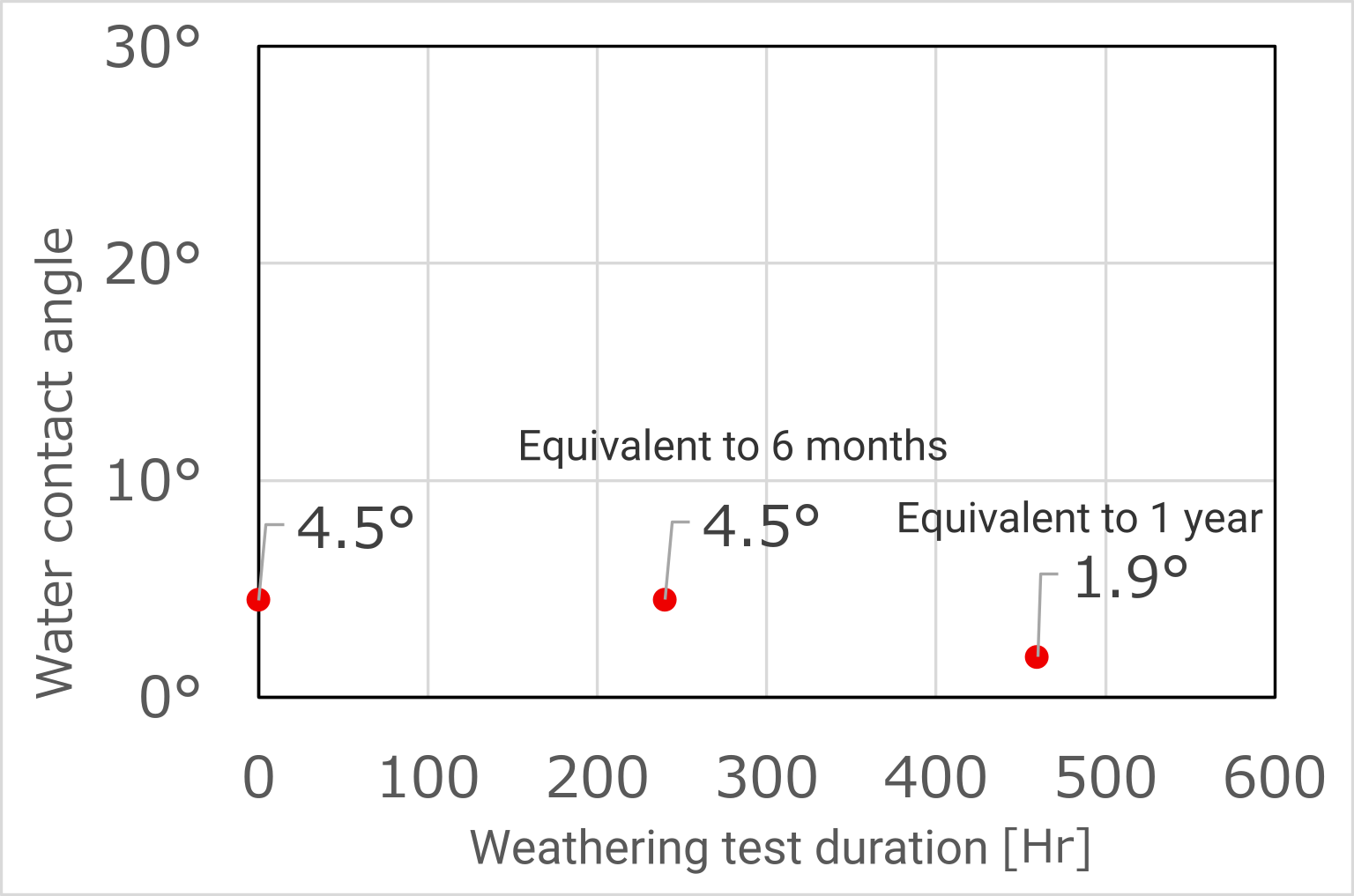
Accelerated Weathering Test Conditions
| Test Equipment | Xenon weather meter |
|---|---|
| Temperature/Humidity | 63±3[℃]、 50±5【%Rh】 |
| Test duration | 460[h] |
| Light source | Quartz/#275 |
| Irradiance | 180[W/m2] |
| Water spray cycle | 18-min spray during 120-min irradiation |
Product material name
| FS-1 | Tania Sol-Based Hydrophilic Coating Material (Two-Component System) |
|---|
Related Information
-
Anti-reflective agents
We produce optical materials based on technology cultivated through the manufacture of anti-reflective agents for camera lenses
Click here for details
-
Synthesis of metal oxide sol particles
Our synthesis technology and track record for nano-sized metal oxide sol particles are introduced here
Click here for details