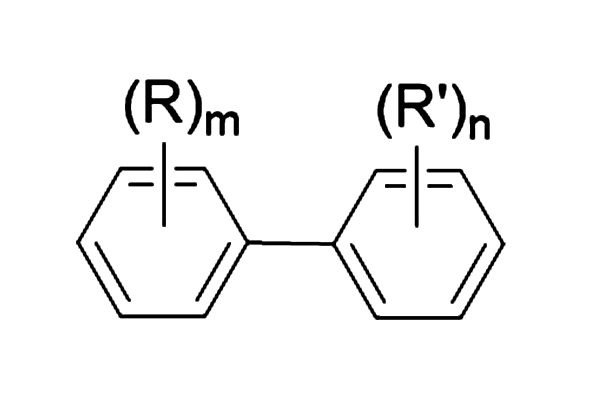
OLED materials
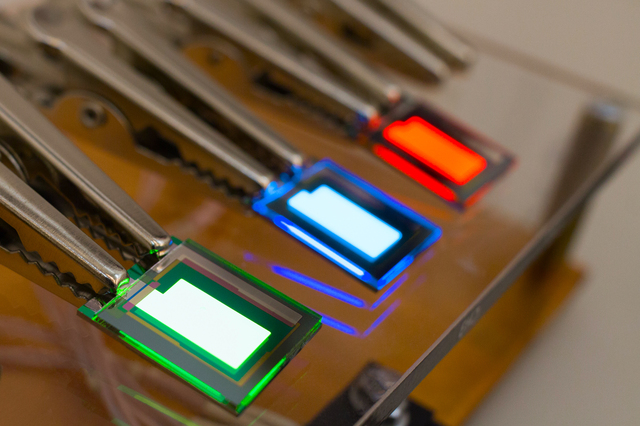
Our OLED materials are used primarily in the key three layers of light-emitting panels (μOLED*2) in the EVF*1 in Canon cameras: the hole transport layer, emission layer, and electron transport layer. High-mix, low-volume production allows us to supply a diverse range of OLED materials at commercial scale, tailored to different needs, properties, and applications.
- *1 EVF:Electronic View Finder
- *2 OLED:Organic Light Emitting Diode
Introducing the Principle
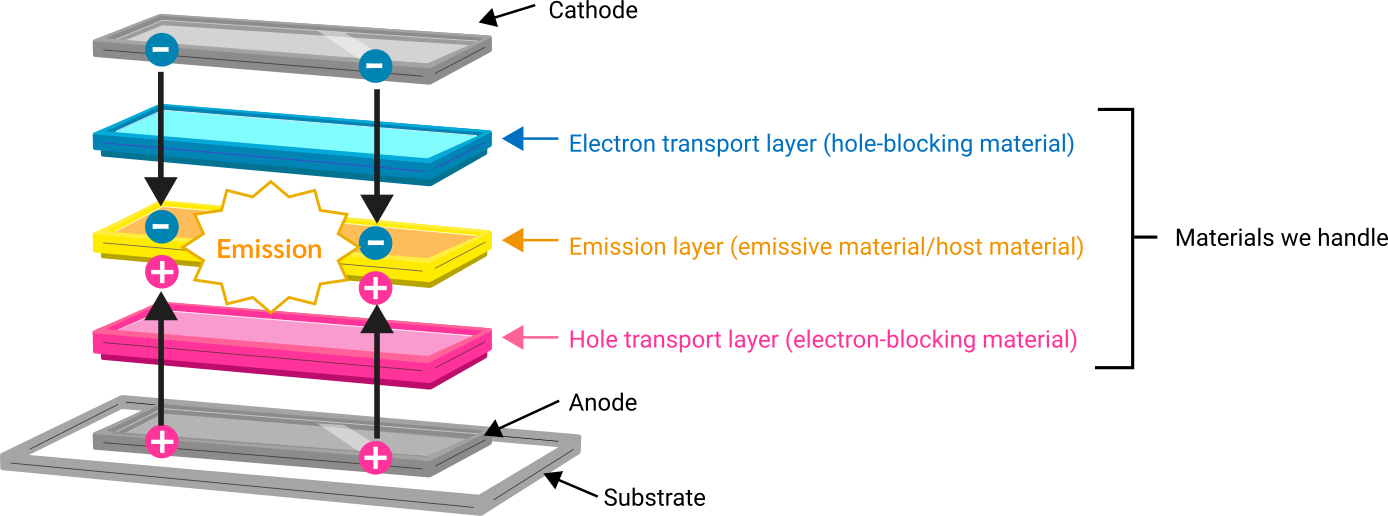
In an OLED, when a voltage is applied, holes are injected from the anode and electrons from the cathode, and light is emitted when the holes and electrons recombine in the emission layer. Organic electronic materials are used in each layer of the OLED.
Production Process and Features
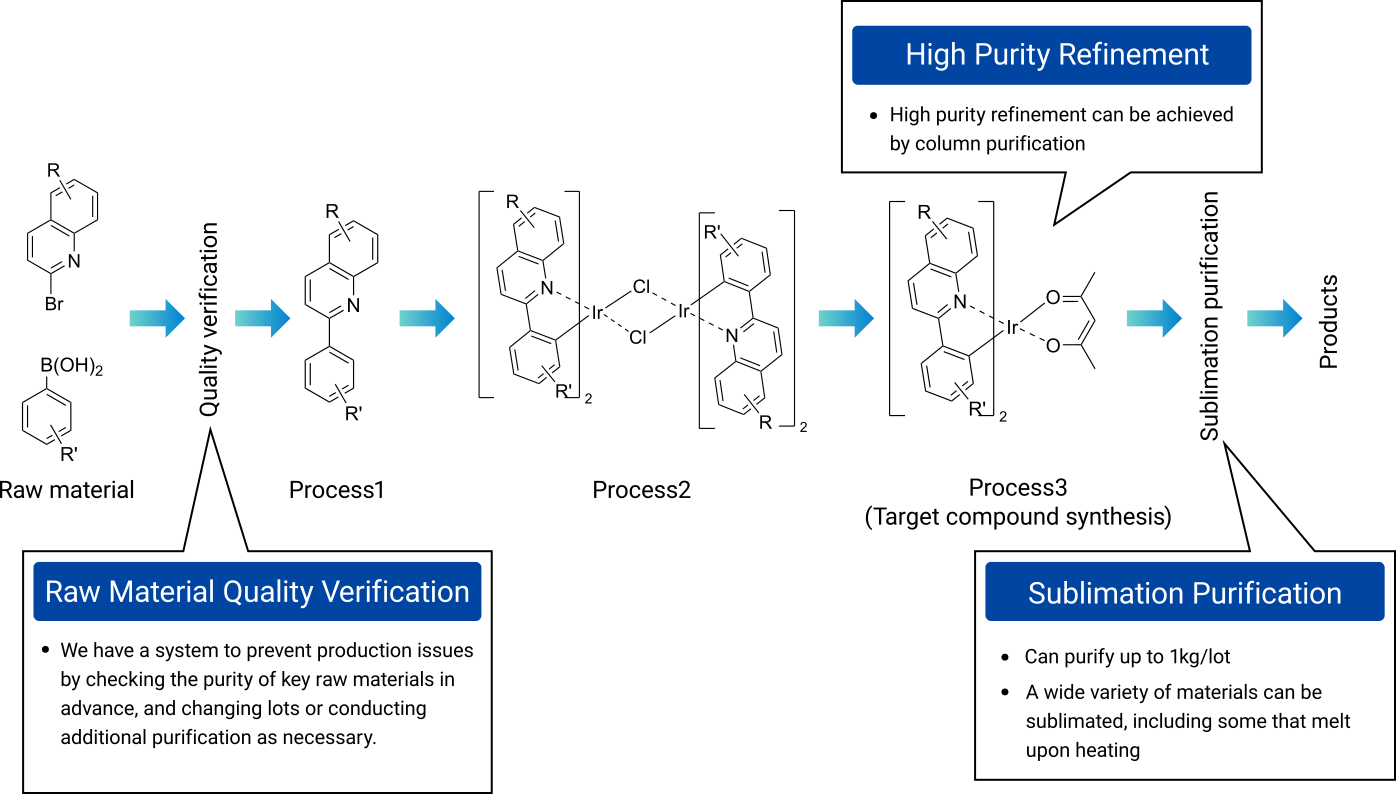
To be able to synthesize OLED materials, which require high purity, we employ the following production process.
Our OLED Material Production Strengths
- Can handle end-to-end production from synthesis to sublimation purification, with extensive experience in multi-step synthesis
- Quality pre-screening of key raw materials to prevent production issues
- Can achieve the high levels of purity required for organic semiconductors
- Sublimation purification enables the removal of solvent and metal components
Track Record with Group Products
| Electron transport material (hole-blocking material) | Low-molecular-weight aromatic compound-based |
|---|---|
| Hole transport material (electron-blocking material) | Low-molecular-weight aromatic compound-based |
| Blue, green and red emissive materials | Low-molecular-weight aromatic compound-based, Transition metal complex-based |
Related Information
-
Our Strengths
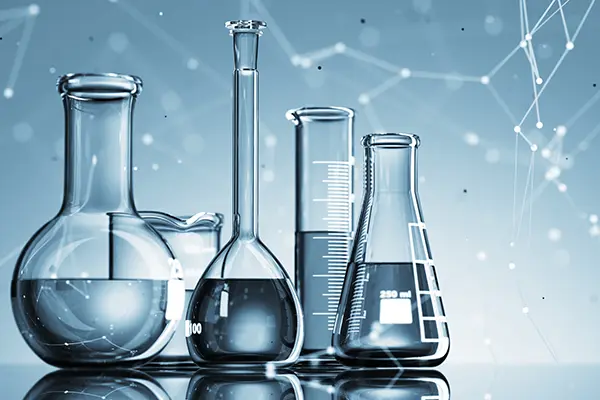
We manufacture high-purity chemical materials for electronic and optical applications.
Click here for details
-
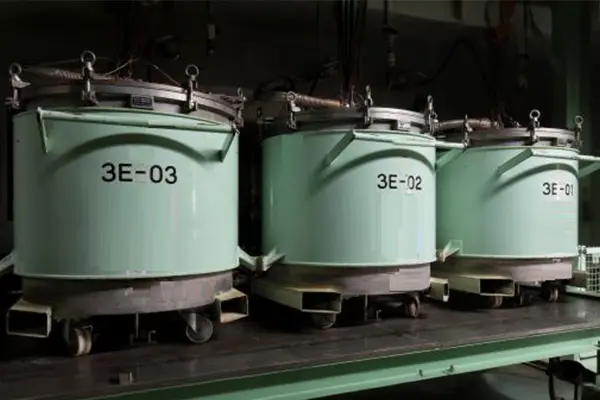
Column purification
A cylindrical container is filled with a packing material, and the substance to be purified is dissolved in a solvent and poured into the container for separation and purification
Click here for details
-
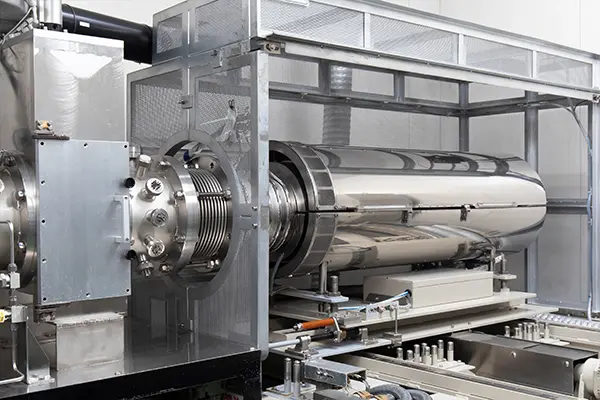
Sublimation purification
Impurities and solvent are removed by utilizing the temperature difference between sublimation and deposition of substances, thereby increasing purity
Click here for details
-
Synthesis of electronic materials
Some compounds we have synthesized and examples of reactions in which we specialize are introduced here
Click here for details